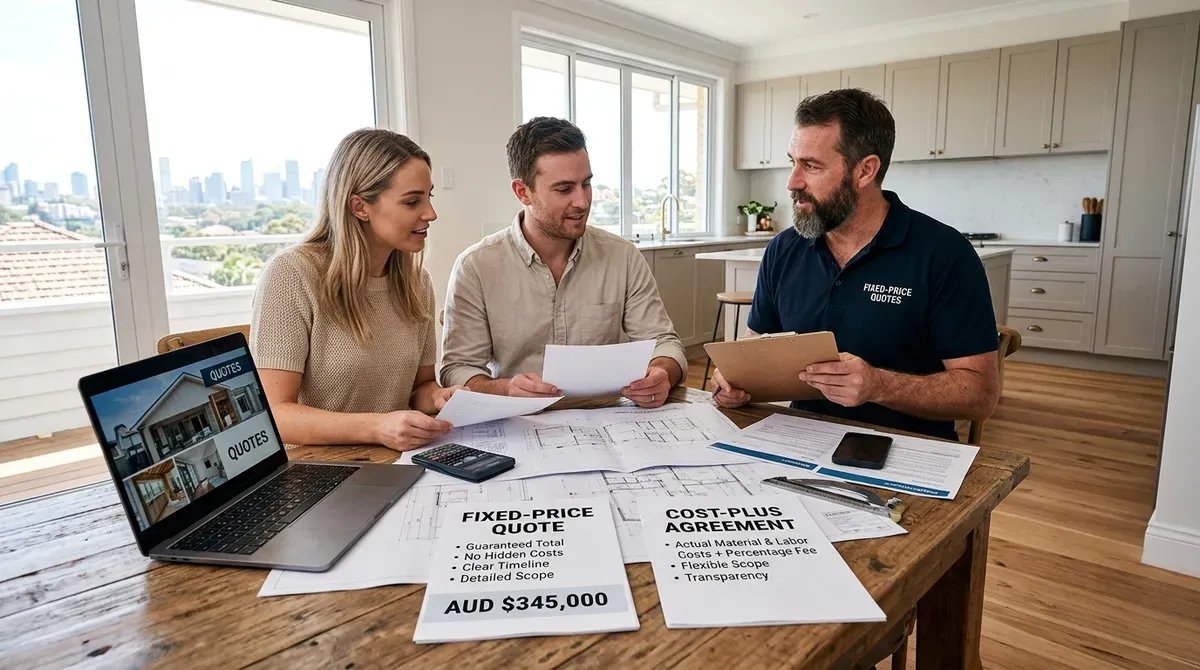
If you are planning a renovation or home extension in Sydney, you will quickly come across two common contract types:
- Fixed-price contracts
- Cost-plus contracts
Both can be good options – and both can go badly wrong if you don’t fully understand how they work.
In this guide, JD Pro Build explains the real differences between fixed-price and cost-plus contracts, when each one makes sense, and how to protect your renovation budget. It is written specifically for Sydney homeowners who want clarity before signing with a builder.
“The best renovation contracts are the ones the homeowner actually understands.”
— JD Pro Build
What Is a Fixed-Price Renovation Contract?
A fixed-price renovation contract (sometimes called a lump sum contract) is a building agreement where you and the builder agree on a total price for the project before work starts.
That total price usually covers:
- Labour
- Materials
- Builder’s margin
- Some contingency or allowances
If everything goes according to the agreed scope and plans, the final amount you pay should match the contract price.
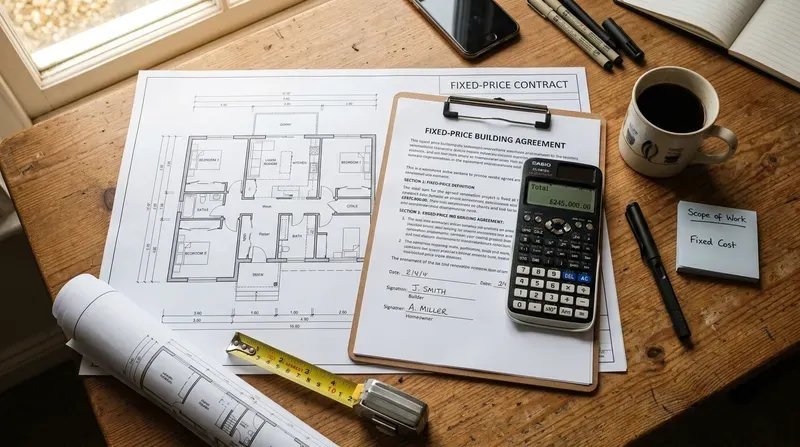 Fixed-price renovation contract explained for Sydney homeowners
How Fixed-Price Contracts Work in Practice
With a fixed-price contract, the builder will:
- Review your drawings, engineering, and specifications
- Estimate all labour and material costs
- Add their margin and any allowances for unknowns
- Present you with a total price for the agreed scope
Once you accept the quote and sign the contract, the price is locked in for that scope of work.
Payments are usually made in stages, such as:
- Deposit
- After demolition and structural work
- After lock-up
- After fixing (internal finishes)
- Practical completion
Prime Cost Items and Provisional Sums
Even in fixed-price contracts, some items cannot be priced exactly at the start. These are often listed as:
- Prime Cost (PC) items – allowances for items you will select later (for example, tiles, tapware, appliances)
- Provisional Sums (PS) – estimates for work that is difficult to price until the site is opened up (for example, excavation, structural repairs to unknown framing)
These items can change the final amount you pay. A contract filled with low PC and PS allowances can look cheap at first but become much more expensive during construction.
“One of the most common surprises we see in Sydney renovations is when a ‘fixed-price’ contract actually contains a lot of provisional sums. That’s where budgets start to blow out.”
— JD Pro Build
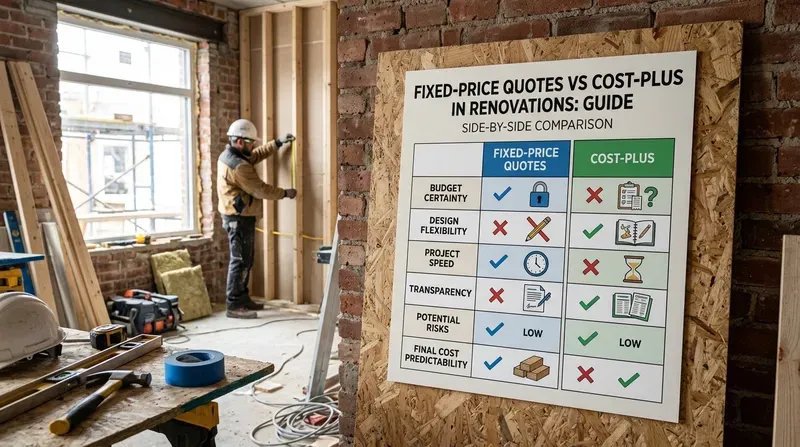 Cost-plus renovation contract example for Sydney home renovations
Pros of Fixed-Price Contracts
- Clear upfront total for the agreed scope
- Easier to plan and secure finance
- Lower risk of major budget blowouts when the scope is well defined
- Financial stress is usually lower for homeowners
Cons of Fixed-Price Contracts
- Less flexibility for changes once the contract is signed
- Variations can be expensive
- If the design or scope is still unclear, the builder may add a risk margin to protect themselves
- A very low fixed-price quote can indicate missing items or unrealistic allowances
What Is a Cost-Plus Renovation Contract?
A cost-plus renovation contract is a building agreement where you pay the actual cost of the work plus an agreed margin for the builder.
Instead of a fixed total price, you receive regular cost reports and invoices that show:
- Labour hours
- Material invoices
- Subcontractor costs
- Builder’s margin (a percentage or fixed fee)
This type of contract is often used when the scope is complex or not fully known at the beginning.
 Comparison of fixed-price and cost-plus renovation contracts in Sydney
How Cost-Plus Contracts Work in Practice
With a cost-plus contract, the builder typically:
- Provides an initial estimate or budget range, not a fixed total
- Tracks all project costs as the work progresses
- Shares detailed cost reports with you on a regular schedule
- Adds their agreed margin on top of actual costs
Pros of Cost-Plus Contracts
- High flexibility to make changes during the project
- Suitable for complex renovations and extensions where unknowns are significant
- You see real costs and can make informed decisions as you go
- Less pressure on the builder to include a large “risk buffer” in the price
Cons of Cost-Plus Contracts
- Less certainty about the final total cost
- Easier for budgets to drift without strong cost control
- Requires more involvement from the homeowner to review and approve costs
- Can strain the relationship if communication is poor
“In our experience, cost-plus contracts work best when the homeowner is comfortable making decisions as the project evolves and is committed to regular budget reviews.”
— JD Pro Build
Key Differences Between Fixed-Price and Cost-Plus Contracts
While both contract types can deliver a successful renovation, they manage risk, flexibility, and budget in very different ways.
Budget Certainty vs Flexibility
- Fixed-price contracts prioritise budget certainty for a clearly defined scope
- Cost-plus contracts prioritise flexibility during construction
If you value a firm budget more than the ability to change your mind mid-project, fixed-price is usually a better fit.
If you expect design changes or anticipate discovering unknown issues in an older Sydney home, cost-plus may be more realistic.
Who Carries the Risk?
- Fixed-price: The builder carries more risk for cost overruns within the agreed scope. They may include a risk margin in the price.
- Cost-plus: You carry more risk for cost overruns, but you also see where every dollar is spent.
How Variations Are Handled
Variations are changes to the original scope of work.
- In a fixed-price contract, variations are priced separately and usually attract a margin
- In a cost-plus contract, variations are simply added to the ongoing cost reports
For both contract types, you should always receive written variation quotes or approvals before work proceeds.
Suitability for Different Types of Renovations
Fixed-price contracts are often suitable for:
- Kitchens and bathrooms with detailed plans and selections
- Straightforward internal renovations
- Smaller extensions with minimal structural changes
Cost-plus contracts are often suitable for:
- Large home extensions and second-storey additions
- Heritage properties and older homes with hidden conditions
- Projects where the design may evolve during construction
For deeper detail on how builders price different types of work, you may also like to read our article on home extension pricing in Sydney (link internally to your pricing-focused article, for example
Real-World Examples from Sydney Renovations
Over the years, JD Pro Build has delivered a wide range of renovations and extensions across Sydney. The following examples illustrate how contract choice affects outcomes.
Example 1 – Fixed-Price Kitchen Renovation
A family in the Inner West engaged us to renovate their outdated kitchen and improve storage.
They had:
- Completed architectural drawings
- Detailed joinery plans
- A clear list of preferred fixtures and finishes
Because the scope was well defined, we recommended a fixed-price contract. The advantages for the client were clear:
- They could secure finance based on a known contract amount
- They knew exactly what was included before work started
- There were no surprises at completion
The only variation occurred when they decided to upgrade their appliances. Because it was handled as a clear, written variation, the process remained transparent and stress-free.
Example 2 – Cost-Plus Extension in an Older Sydney Home
In contrast, we worked on a large rear extension and partial second-storey addition to a 100-year-old home in Sydney’s North Shore.
In this project, we knew from the start that:
- The existing structure might require significant remedial work
- There could be asbestos, rotten framing, or non-compliant wiring
- The homeowners still wanted flexibility for some design details
We recommended a cost-plus contract with agreed reporting and review milestones. This allowed the owners to:
- See the actual costs of structural repairs as we uncovered issues
- Make informed decisions about where to invest and where to save
- Adjust material choices to keep the overall budget on track
The final cost was higher than the initial estimate, but the homeowners felt in control because every major decision was made with clear cost information.
“With older Sydney homes, we find that trying to force everything into a fixed-price contract can either push the price too high upfront or lead to painful variations later. In those cases, a carefully managed cost-plus contract can be more honest for everyone.”
— JD Pro Build
How to Decide Which Contract Type Is Right for Your Sydney Renovation
Choosing between fixed-price and cost-plus should not be based on price alone. It should be based on:
- How clear your design and scope are
- How much flexibility you want during construction
- How comfortable you are with budget uncertainty
- The condition and age of your home
Step-by-Step Framework for Homeowners
To make a confident decision, work through the following steps.
Step 1 – Assess How Defined Your Scope Is
Ask yourself:
- Do you have final architectural plans and engineering?
- Have you selected most of your fixtures and finishes?
- Do you understand all of the rooms and spaces being changed?
If the answer to most of these questions is “yes”, a fixed-price contract may be appropriate.
If your design is still evolving or you expect to change your mind, cost-plus may make more sense.
Step 2 – Consider the Age and Condition of Your Home
Newer homes and straightforward layouts are usually easier to price as fixed-price contracts.
Older homes, heritage properties, and houses with previous DIY work often involve unknowns behind the walls and under the floors. In these cases, you may want to:
- Allow a larger contingency
- Be open to cost-plus or a hybrid approach (for example, fixed-price for known elements and cost-plus for high-risk components)
For more on how the age of your home affects renovation costs, you can continue with our article on common renovation pitfalls in older Sydney homes (internal link to your relevant article, for example
Step 3 – Decide How Involved You Want to Be
Some homeowners want minimal involvement and high predictability. Others are comfortable making many decisions throughout the project.
- If you prefer clear numbers and fewer decisions, a well-drafted fixed-price contract is usually better
- If you are detail-oriented and enjoy being part of each decision, a cost-plus contract may suit you
Step 4 – Understand Your Risk Tolerance
Think honestly about:
- How you would handle unexpected costs
- Whether you have room in your budget for contingencies
- How important it is for you to keep the final cost close to a specific number
Discuss these points openly with your builder. A trustworthy builder will explain how each contract type aligns with your risk tolerance.
Step 5 – Ask Builders the Right Questions
Before choosing a contract type, speak with at least one builder who can explain each option clearly. Some helpful questions include:
- What percentage of your recent projects have been fixed-price vs cost-plus?
- In what situations do you recommend each contract type?
- How do you manage provisional sums and prime cost items?
- How will you keep me informed about costs and variations?
If you do not receive clear, straightforward answers, treat that as a warning sign.
Common Mistakes Homeowners Make When Choosing Contracts
We regularly meet Sydney homeowners who are frustrated by renovation experiences that could have been avoided with better contract decisions. Some of the most common mistakes include:
Choosing a Builder on Price Alone
A very low fixed-price quote can be attractive, but it may hide:
- Incomplete scope
- Unrealistically low allowances for PC and PS items
- Insufficient time allowed for quality workmanship
A more realistic quote from a reputable builder often leads to a smoother experience and better long-term value.
For a broader view on comparing quotes, you may want to read our guide on understanding renovation quotes and inclusions (internal link to your article, for example
Not Reading the Contract Carefully
Many homeowners only skim their building contract, focusing on the total price and start date. However, the details of the contract are where risk is managed.
Pay close attention to:
- How variations are handled
- What is included and excluded
- The schedule of progress payments
- The treatment of delays and extensions of time
If you are unsure about any clause, seek independent legal advice.
Ignoring Provisional Sums and Allowances
Provisional sums and allowances can dramatically affect your final cost.
Always ask:
- Why is this item provisional?
- How was the allowance amount calculated?
- What happens if the actual cost is higher?
Assuming “Fixed-Price” Means “No Changes in Cost”
Even in fixed-price contracts, you can still face cost changes if:
- You request variations
- You upgrade materials or fixtures
- Site conditions differ from what was reasonably allowed for in the contract
A good builder will explain these possibilities clearly before you sign.
Protecting Your Renovation Budget – Practical Tips
Regardless of which contract type you choose, there are practical steps you can take to protect your budget.
Be as Clear as Possible About Your Vision
The more clearly you can describe what you want, the more accurately a builder can price it. Consider preparing:
A written brief describing how you use each space
Inspiration images that show the look and feel you like
Priority lists of what is “must-have” and what is “nice-to-have”
Allow a Realistic Contingency
Even with a detailed fixed-price contract, it is wise to set aside a contingency.
For many Sydney renovation projects, homeowners feel more comfortable when they:
- Keep 10–20% of their budget reserved for unforeseen costs
- Avoid committing 100% of their borrowing capacity to the contract sum alone
Keep Communication Open and Honest
Regular, open communication with your builder is one of the best protections for your budget.
Ask for:
Clear written variation quotes before approving changes
Regular updates on progress and costs
Early warnings when potential issues are detected
“When both homeowner and builder treat the budget as a shared responsibility, renovation projects almost always feel less stressful and more rewarding.”
— JD Pro Build
Important Notes on Legal and Financial Considerations
Building contracts are legal documents. They also have a major impact on your finances.
This guide is general information only. It does not replace personalised advice from a solicitor or financial professional.
Before you sign any contract, you should:
- Read all terms and conditions carefully
- Ask your builder to explain any sections you do not understand
- Seek independent legal advice if you have concerns
How JD Pro Build Supports You in Choosing the Right Contract
At JD Pro Build, we believe that a successful renovation starts long before the first hammer is lifted. It starts with the right contract structure and clear expectations.
When you speak with us about your Sydney renovation, we will:
- Discuss your goals, budget, and risk comfort level
- Review the condition and age of your home
- Explain the differences between fixed-price and cost-plus in plain language
- Recommend the contract type that best fits your project
- Provide transparent, detailed documentation so you know exactly what you are signing
Our team has delivered numerous renovations and extensions across Sydney using both contract types. That experience allows us to:
- Anticipate common issues before they become problems
- Suggest where fixed pricing makes sense and where flexibility is safer
- Help you understand the trade-offs between certainty and adaptability
Next Steps for Your Sydney Renovation
If you are currently comparing fixed-price and cost-plus quotes, or you are unsure which approach is right for your home, you do not need to decide alone.
JD Pro Build can:
- Review your plans and existing quotes
- Help you understand what is included – and what is missing
- Recommend a contract structure that aligns with your goals and budget
You can continue your research by exploring related guides on our website, such as:
- How to Read and Compare Renovation Quotes in Sydney
- Home Extension Pricing in Sydney: What to Expect
- Common Renovation Pitfalls in Older Sydney Homes
- How to Plan a Realistic Renovation Budget in Sydney
When you are ready, contact JD Pro Build to discuss your renovation or home extension. We are here to help you make confident decisions, choose the right contract type, and move forward with a renovation that suits your Sydney lifestyle and budget.
“Our goal is simple: to help Sydney homeowners renovate with confidence – with contracts that are fair, transparent, and aligned with their vision.”
— JD Pro Build
Is fixed-price or cost-plus better for renovations?
A fixed-price contract is generally better when the scope is clearly defined, while cost-plus contracts work well for projects with unknown conditions or evolving designs.
Can a fixed-price contract still increase in cost?
Yes. Variations, upgraded selections, and unforeseen site conditions may increase the final project cost.
What is a provisional sum in a renovation contract?
A provisional sum is an estimated allowance for work that cannot be accurately priced before construction begins.
Do Sydney builders offer both contract types?
Many experienced renovation builders offer both fixed-price and cost-plus contracts depending on the project requirements.
Which contract type is best for older homes?
Cost-plus contracts are often better suited to older homes because hidden structural issues can be difficult to predict before demolition begins.