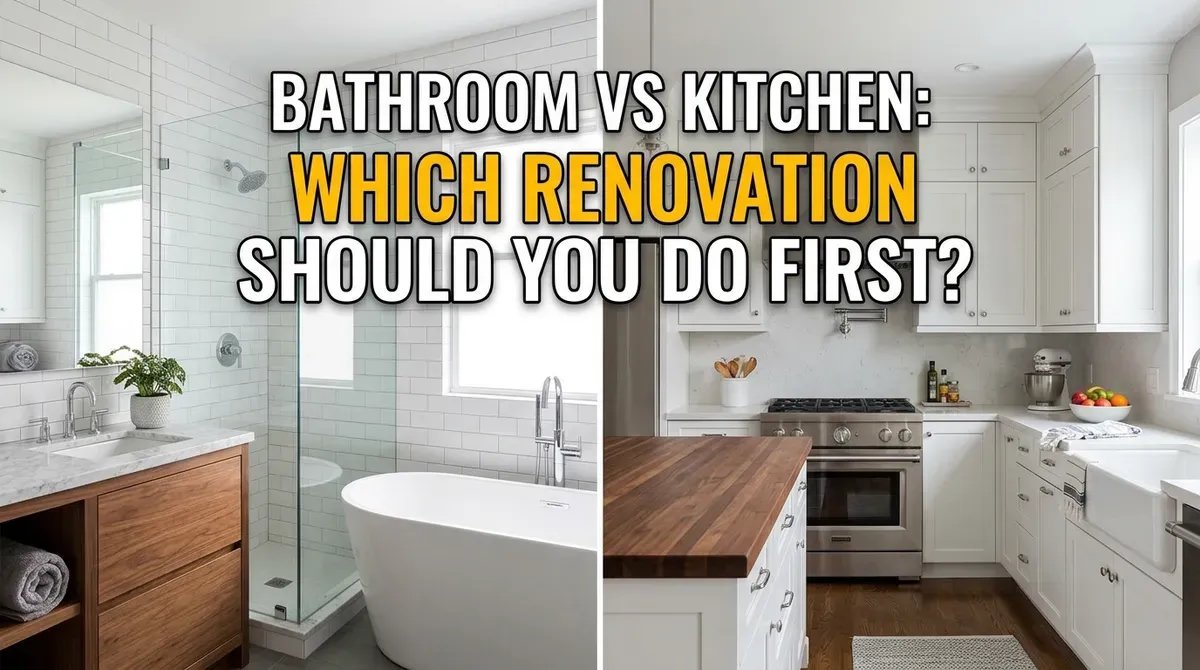
You have saved up for a major home upgrade, and now you are facing one of the most common renovation decisions: should you renovate the bathroom or the kitchen first?
The honest answer is that there is no single right choice for every home. A kitchen renovation can transform the way your family cooks, gathers, and entertains. A bathroom renovation can solve daily frustrations, improve comfort, and fix hidden moisture problems before they become expensive.
At JD PRO BUILD, we usually help Sydney homeowners make this decision by looking at three things first: the condition of each room, the available budget, and how the renovation will affect daily life. Once those factors are clear, the right starting point becomes much easier to choose.

Quick Answer: Should You Renovate the Bathroom or Kitchen First?
Renovate the bathroom first if there are leaks, mould, poor ventilation, failing waterproofing, plumbing issues, or safety concerns.
Renovate the kitchen first if the bathroom is still functional but the kitchen has a poor layout, limited storage, outdated appliances, unsafe electrical issues, or a major impact on resale appeal.
If both rooms are simply outdated, start with the space that affects your daily routine the most. For many Sydney families, that is the kitchen. For homeowners dealing with water damage or a tight staged renovation budget, the bathroom often comes first.
Bathroom vs Kitchen Renovation: Key Differences
Before choosing which room to renovate first, it helps to compare the two projects side by side.
| Factor | Bathroom Renovation First | Kitchen Renovation First |
|---|---|---|
| Best For | Homes with leaks, mould, poor ventilation, waterproofing issues, or an outdated bathroom are affecting daily comfort. | Homes where the kitchen layout is inefficient, lacks storage, or no longer suits the household’s needs. |
| Typical Cost | Generally lower than a full kitchen renovation, making it a more accessible starting point for many homeowners. | Usually requires a larger investment due to cabinetry, benchtops, appliances, plumbing, and electrical work. |
| Impact on Daily Life | Primarily affects bathing, personal hygiene, and morning routines during construction. | Has a greater impact on daily living, as cooking, cleaning, food preparation, and family meals may be disrupted. |
| Property Value & Resale Appeal | Can significantly improve buyer appeal when the existing bathroom appears dated, damaged, or poorly maintained. | Often delivers strong resale value because the kitchen is one of the most important spaces buyers evaluate. |
| Project Duration | Typically completed faster, depending on the size and complexity of the renovation. | Often takes longer due to custom joinery, appliance lead times, and coordination between multiple trades. |
| Common Hidden Issues | Waterproofing failures, drainage problems, inadequate ventilation, and concealed mould damage. | Electrical upgrades, plumbing modifications, layout changes, cabinetry adjustments, and appliance integration challenges. |
| Best for Staged Renovations | A practical first step when working with a limited budget and planning future renovations in stages. | Better suited to homeowners who are ready to undertake a larger project and commit to a higher upfront investment. |
At JD PRO BUILD, we often recommend homeowners avoid making this choice based only on appearance. A dated kitchen may be annoying, but an active bathroom leak can become urgent. On the other hand, a functional bathroom can often wait if the kitchen is stopping the home from working properly.
Bathroom vs Kitchen Renovation Costs in Sydney
Renovation costs vary depending on room size, materials, labour, site access, existing damage, layout changes, and the quality of finishes selected. However, Sydney homeowners can use broad cost ranges to plan the first stage of a renovation.
| Renovation Type | Typical Sydney Cost Range | Best Suited For |
|---|---|---|
| Small or Basic Bathroom Renovation | $8,000–$15,000+ | Ideal for compact bathrooms requiring minor upgrades, fixture replacements, and limited layout changes. |
| Standard Bathroom Renovation | $15,000–$35,000+ | Suitable for homeowners seeking a complete bathroom renovation with new tiling, fixtures, waterproofing, and modern finishes. |
| Premium Bathroom Renovation | $35,000–$40,000+ | Best for luxury bathrooms featuring premium materials, custom design elements, high-end fixtures, and complex construction requirements. |
| Cosmetic Kitchen Refresh | $15,000–$25,000+ | A cost-effective option for updating kitchen doors, panels, benchtops, splashbacks, paintwork, and other cosmetic features without a full replacement. |
| Mid-Range Kitchen Renovation | $25,000–$50,000+ | Popular for complete kitchen upgrades that include new cabinetry, benchtops, appliances, plumbing, and electrical improvements. |
| Premium Custom Kitchen Renovation | $60,000–$150,000+ | Designed for homeowners seeking bespoke joinery, premium appliances, stone benchtops, layout reconfiguration, and high-end finishes throughout the kitchen. |
For a deeper project-specific estimate, speak with a licensed renovation builder who can inspect the space, understand your goals, and identify any hidden issues before quoting.
When Should You Renovate the Bathroom First?
A bathroom renovation should usually come first when the room has functional, safety, or moisture-related problems.
Bathrooms are wet areas, so small defects can become larger issues if ignored. A leaking shower, poor ventilation, or failed waterproofing can affect walls, flooring, ceilings, adjoining rooms, and even the structure beneath the surface.
Choose the bathroom first if:
- You can see mould, damp patches, or swelling cabinetry.
- The bathroom has a persistent musty smell.
- Tiles are loose, cracked, or lifting.
- Grout or silicone is failing around wet areas.
- The shower leaks into nearby rooms or below the floor.
- Ventilation is poor, and condensation stays on walls or ceilings.
- Plumbing issues keep returning.
- The bathroom is unsafe, slippery, cramped, or difficult to use.
- You only have enough budget for one smaller renovation right now.
Leaks, Mould, and Waterproofing Issues
Water damage should always move a bathroom renovation higher on your priority list. Cosmetic upgrades can wait. Active moisture problems should not.
A bathroom with failing waterproofing may look manageable from the outside, but the real damage can sit behind tiles, under flooring, or inside wall cavities. By the time visible damage appears, the repair may already be more complex than expected.
“Plan ventilation and indoor air quality from the design stage of a renovation, not as an afterthought.”
— Australian Government YourHome guidance on renovations and indoor air quality
For Sydney homeowners, this is especially important in older properties where previous bathroom work may not have been completed to modern expectations. A good bathroom renovation is not just about new tiles and tapware. It should also address waterproofing, drainage, ventilation, layout, lighting, and long-term usability.
Poor Ventilation or Condensation
Ventilation is one of the most overlooked bathroom renovation issues. If steam lingers after showers, condensation forms on walls, or mould keeps returning, the bathroom may need more than a surface-level update.
A well-planned bathroom renovation should consider:
- An exhaust fan that vents outside the building.
- Natural ventilation where practical.
- Better airflow around wet zones.
- Moisture-resistant materials.
- Correct waterproofing behind wet areas.
- Lighting that makes the space safer and easier to use.
A Smaller Budget or Staged Renovation Plan
If your budget is limited, starting with the bathroom can be a practical choice. A single bathroom renovation is often more achievable than a full kitchen renovation, especially if you want to avoid stretching your finances too far.
A bathroom can also work well as the first stage of a larger home upgrade. It allows you to improve one essential space, understand the renovation process, and then plan the kitchen when your budget is ready.
At JD PRO BUILD, we often help clients plan staged renovations so they can improve the home without taking on too much disruption at once. For example, a homeowner may renovate the main bathroom first, then move to the kitchen several months later, once the household has recovered financially and practically.
When Should You Renovate the Kitchen First?
A kitchen renovation should usually come first when the kitchen is the main source of daily frustration or the biggest weakness in the home’s layout.
The kitchen is often the centre of family life. It affects cooking, storage, and entertaining in the home. If the kitchen is cramped, poorly planned, or visibly dated, renovating it first can change how the entire home feels.
Choose the kitchen first if:
- The layout makes cooking difficult.
- There is not enough bench space.
- Storage is poor or badly organised.
- Appliances are old, inefficient, or unreliable.
- Electrical points are inconvenient or potentially unsafe.
- The kitchen feels disconnected from dining or living areas.
- You regularly entertain, and the kitchen affects how guests experience the home.
- You are preparing to sell, and the kitchen is the most noticeable outdated space.

Poor Layout or Lack of Storage
A kitchen does not need to be falling apart to justify renovating it first. Sometimes the biggest problem is layout.
If you constantly walk back and forth between the sink, stove, fridge, and pantry, the kitchen may be slowing down daily life. If small appliances clutter the benchtop because there is not enough storage, the space may feel stressful even after cleaning. If the dining and kitchen areas feel disconnected, entertaining can become awkward.
A good kitchen renovation should improve how the space works, not just how it looks. That means thinking carefully about workflow, storage, lighting, power points, appliance placement, bench space, and how people move through the room.
Resale Appeal and Buyer First Impressions
If you are planning to sell within the next 12 to 24 months, the kitchen deserves serious attention. Buyers often form strong opinions about a home based on the kitchen because it is one of the most visible and frequently used spaces.
A tired kitchen can make the whole property feel dated. A well-designed kitchen can make the same home feel brighter, more functional, and better cared for.
However, this does not mean every seller should invest in a luxury kitchen. The goal is to match the renovation level to the property, suburb, and likely buyer expectations. Overcapitalising can reduce the return on your investment.
Daily Lifestyle and Family Use
For families, the kitchen can be the most important room in the home. It is where meals are prepared, school lunches are packed, guests gather, and conversations happen at the end of the day.
If the current kitchen creates daily frustration, renovating it first may deliver the biggest lifestyle improvement.
One of the patterns we often see at JD PRO BUILD is that homeowners underestimate the emotional value of a functional kitchen. More storage, better lighting, and a smarter layout can reduce daily stress far more than people expect.
Safety and Hidden Problems Should Come Before Cosmetic Upgrades
When deciding between a bathroom and kitchen renovation, safety should always come before appearance.
A beautiful new kitchen can wait if the bathroom has active water damage. A stylish bathroom can wait if the kitchen has unsafe electrical issues. The priority should be the issue that could create higher repair costs, safety concerns, or long-term damage if ignored.
Watch for warning signs such as:
- Active leaks.
- Mould growth.
- Water stains on ceilings or walls.
- Soft or swollen flooring.
- Burning smells near power points or appliances.
- Frequently tripping circuits.
- Loose tiles in wet areas.
- Persistent drainage problems.
- Poor ventilation and recurring condensation.
If you are unsure whether an issue is cosmetic or serious, arrange a professional inspection before committing to a renovation order.
How Daily Disruption Affects Your Decision
Renovation decisions are not only financial. They are also practical.
Losing access to a kitchen is very different from losing access to a bathroom. Before you decide which room comes first, think honestly about how your household will function during construction.
Living Without a Kitchen During Renovation
A kitchen renovation can disrupt cooking, washing dishes, food storage, and family meals. Depending on the size of the project, the disruption may last several weeks or longer.
To make the process easier, plan with:
- A temporary cooking station.
- A microwave, air fryer, kettle, or slow cooker.
- A small fridge if the main fridge is disconnected.
- Disposable or easy-wash meal options.
- A clear dust-control plan.
- A realistic takeaway or meal-prep budget.
If you have young children, work from home, or cook most meals at home, kitchen disruption may feel more intense than expected.
Living Without a Bathroom During Renovation
A bathroom renovation can be easier to manage if the home has a second bathroom. If it does not, the project becomes much more disruptive.
Before renovating your only bathroom, think about:
- Whether you can stay elsewhere during key stages.
- Whether another toilet or shower is available.
- How long will waterproofing, tiling, and drying times take?
- Whether children, older family members, or guests will be affected.
- How the builder will manage dust, access, and daily site safety.
A bathroom may be smaller than a kitchen, but if it is the only bathroom in the home, planning is critical.
Should You Renovate the Kitchen and Bathroom at the Same Time?
Renovating the kitchen and bathroom at the same time can make sense in some situations, but it is not right for every household.
It may be worth doing both together if:
- You have the budget ready.
- You want to reduce the total construction timeline.
- The same trades are needed for both rooms.
- You are completing a larger home renovation.
- You can live elsewhere temporarily.
- You want a consistent design style throughout the home.
It may be better to renovate separately if:
- You need to manage cash flow carefully.
- You cannot handle major disruption at once.
- You need at least one fully functioning wet area.
- You are unsure about the final selections.
- You want to test the renovation process before committing to a larger project.
Bundling projects can sometimes improve trade efficiency, but it also increases the pressure on your household. The right choice depends on your budget, living arrangements, and tolerance for disruption.
If you are considering a broader home upgrade, JD PRO BUILD can help you plan the renovation order so the work is staged logically and avoids unnecessary rework.
Bathroom First or Kitchen First? Use This Decision Checklist
If you are still unsure, use this checklist to make a practical decision.
Start with the bathroom if:
There are leaks, mould, or waterproofing concerns.
- Ventilation is poor, and condensation keeps returning.
- The bathroom is unsafe, slippery, or difficult to use.
- You have a smaller renovation budget.
- You want a faster first-stage project.
- The bathroom looks damaged or poorly maintained.
- The bathroom is the room that most affects daily comfort.
Start with the kitchen if:
The bathroom is still functional.
The kitchen layout makes daily cooking difficult.
Storage and bench space are major problems.
The kitchen is the most visible, outdated area.
You are preparing the home for sale.
You regularly entertain at home.
You have the budget for a larger renovation.
The kitchen affects how the whole home feels.
If both rooms are equally dated, choose the project that solves the bigger daily problem or removes the bigger resale objection.
Sydney-Specific Renovation Factors to Consider
Renovating in Sydney comes with practical considerations that can affect cost, timeline, and project order.
Homeowners should consider:
- Site access and parking for trades.
- Strata rules for apartments and units.
- Older plumbing or electrical systems.
- Waterproofing standards for wet areas.
- Cabinetry and appliance lead times.
- Council or building requirements where relevant
- Noise restrictions in apartments or dense suburbs.
- Property value and suburb expectations.
- Whether the home will be occupied during the renovation.
Sydney homes vary widely, from older freestanding houses to terraces, duplexes, apartments, and investment properties. The best renovation order should match the property type, not just the homeowner’s design preferences.
For example, an apartment owner may prioritise the bathroom first if there are waterproofing concerns and strata implications. A family in a freestanding home may prioritise the kitchen first if the layout affects everyday living and entertaining.
Avoid Overcapitalising
One of the biggest renovation mistakes is spending more than the property can reasonably support.
A premium kitchen may look impressive, but it may not deliver the best return if the home, location, or buyer market does not justify that level of finish. Similarly, a luxury bathroom may not be necessary in a modest investment property where durability and easy maintenance matter more.
A balanced renovation should consider:
- The current property value.
- The local suburb market.
- The expected buyer profile.
- The condition of the rest of the home.
- The quality level of nearby comparable homes.
- Your long-term plans for the property.
- Whether you are renovating to sell or stay.
For many Sydney homeowners, a well-planned mid-range renovation delivers better practical value than an overdesigned luxury upgrade.
How JD PRO BUILD Helps Homeowners Choose the Right Renovation Order
Choosing between a bathroom and kitchen renovation can feel overwhelming, especially when both rooms need work. Our role is to help you make a clear, practical decision based on the home’s condition, your budget, and your lifestyle.
We Assess the Condition of Each Room
We look beyond surface appearance and consider whether there are hidden issues that may affect the renovation order.
This may include:
- Moisture damage.
- Ventilation problems.
- Plumbing concerns.
- Electrical limitations.
- Layout restrictions.
- Structural or access considerations.
- Safety concerns.
A renovation should solve real problems, not simply cover them with new finishes.
We Discuss Your Budget and Priorities
Every homeowner has a different comfort level when it comes to cost. Some want to complete everything at once. Others prefer a staged approach that spreads the investment over time.
We help you compare what is urgent, what can wait, and what will deliver the most meaningful improvement first.
We Plan Around Daily Life
A renovation should be exciting, but it also needs to be manageable. We talk through how the work will affect your household so you can prepare properly before construction begins.
This includes access, temporary facilities, timelines, dust control, trade scheduling, and whether staging the work will make life easier.
We Create a Practical Renovation Path
Sometimes the right answer is bathroom first. Sometimes it is kitchen first. Sometimes the smartest approach is to plan both rooms together, but build them in stages.
The goal is to create a renovation path that improves the home without creating unnecessary stress, cost, or rework.
FAQs About Bathroom vs Kitchen Renovations
Is it better to renovate the bathroom or the kitchen first?
It is better to renovate the bathroom first if there are leaks, mould, poor ventilation, waterproofing issues, or safety concerns. It is better to renovate the kitchen first if the bathroom is functional, but the kitchen layout, storage, appliances, or resale appeal are the bigger problems
Which renovation adds more value: bathroom or kitchen?
Both can add value, but kitchens often create stronger buyer appeal because they are central to daily living and property presentation. Bathrooms are also important because visible water damage, mould, or poor maintenance can reduce buyer confidence.
Is a bathroom renovation cheaper than a kitchen renovation?
In many Sydney homes, a bathroom renovation is usually cheaper than a full kitchen renovation. Kitchens often involve cabinetry, benchtops, appliances, plumbing, electrical work, splashbacks, flooring, lighting, and layout decisions, which can increase the total investment.
Should I renovate the kitchen and bathroom at the same time?
Renovating both at the same time can be efficient if you have the budget, clear plans, and somewhere comfortable to stay during the most disruptive stages. If budget or daily disruption is a concern, renovating separately may be a better option.
What should I renovate first before selling my house?
Before selling, renovate the room that creates the biggest buyer objection. If the bathroom has water damage, mould, or failed waterproofing, fix the bathroom first. If both rooms are functional but dated, the kitchen may create stronger first impressions and better buyer appeal.
What if my budget only covers one renovation?
If your budget only covers one renovation, start with the room that has the most urgent functional issue. If there are no urgent problems, choose the room that will improve daily life the most or help the property present better if you plan to sell.
Final Recommendation
So, should you renovate the bathroom or kitchen first?
Renovate the bathroom first if there are water issues, mould, poor ventilation, safety concerns, or a tighter budget. Renovate the kitchen first if the bathroom is functional, but the kitchen is limiting daily life, reducing storage, affecting entertaining, or weakening resale appeal.
The right choice is not about which room is more popular. It is about which renovation will solve the most important problem first.
At JD PRO BUILD, we help Sydney homeowners make confident renovation decisions with practical advice, transparent planning, and a clear understanding of how each project affects the home.
If you are unsure where to begin, contact JD PRO BUILD to discuss your bathroom renovation, kitchen renovation, budget, timeline, and long-term plans. We can help you choose the right starting point and build a space your family will enjoy for years to come.