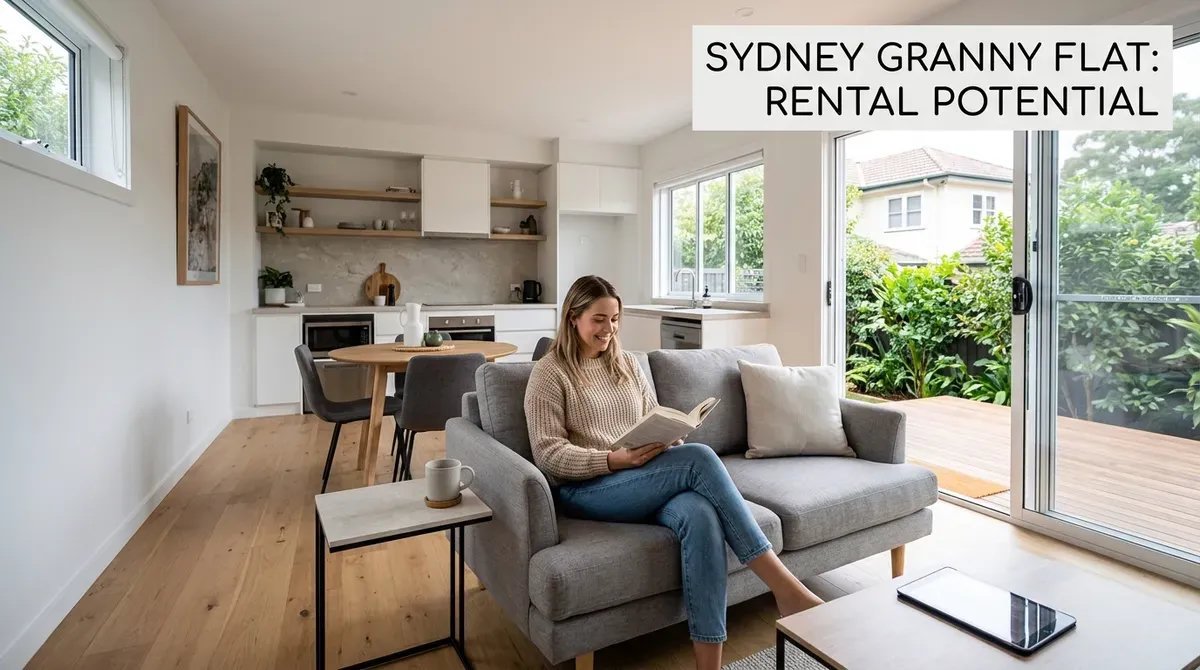
With Sydney’s property market still highly competitive in 2026, many homeowners are turning to their backyards to unlock new income. Adding a compliant granny flat can transform an underused space into a reliable cash‑flow asset – but only if you understand the numbers and the risks.
At JD PRO BUILD, we have delivered dozens of granny flats across Sydney – from Western Sydney and the South West to the Inner West, Eastern Suburbs, Northern Beaches and North Shore. We see real rental figures and real returns every week, not just theoretical models.
This guide brings together what we’ve learned on the ground, so you can answer the key question with confidence:
“How much rental income can a granny flat actually generate in Sydney – and is it worth it for my block?”
JD PRO BUILD – Sydney Granny Flat Specialists
By the end of this article, you will understand:
- Typical granny flat rental ranges in different parts of Sydney
- The main factors that push your rent up – or hold it back
- Key risks around vacancies, maintenance, regulations and tax
- Practical steps to design a flat that attracts high‑quality tenants
Why Granny Flats Appeal to Sydney Investors
Turning Existing Land into Cash Flow
Traditional investment properties in Sydney often require large deposits, high loan balances, and can be negatively geared for years. A granny flat is different because you are leveraging land you already own.
- Existing homes that were slightly cash‑flow negative become neutral or positive once a granny flat is rented
- Owners using granny flat rent to cover a large portion of their mortgage repayments
- Investors increasing their total rent roll without having to buy an entirely new property
In other words, you are adding a second income stream to the same title rather than taking on the full cost of a second house and block.
Diversifying Your Rental Income
Relying on a single tenant for all your rental income is risky. If they move out, your income drops to zero.
By adding a granny flat, you can:
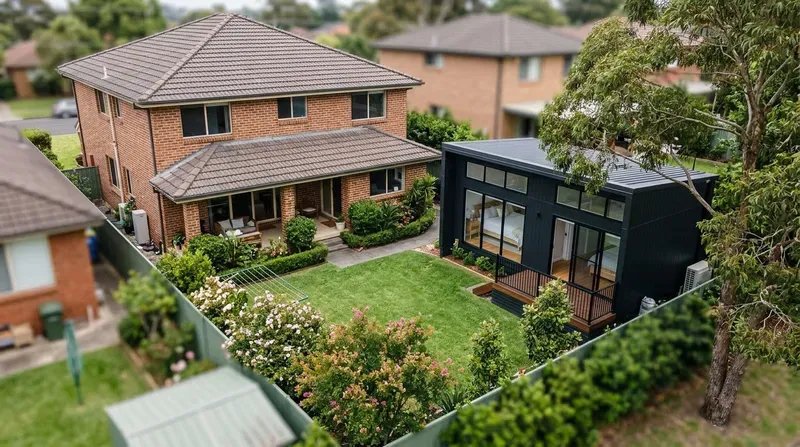
- Create a dual income property – one tenant in the main house, another in the flat
- Cater to different tenant profiles on the same block (for example, a family in the main dwelling and a single professional in the flat)
- Smooth out your cash flow when one tenancy turns over before the other
Manufacturing Equity on Your Block
Buying an extra investment property in Sydney usually means stamp duty, legal fees and high purchase prices. Building a granny flat is a way of “manufacturing” equity directly on your existing land.
In many of our projects, a well‑designed, fully approved granny flat:
- Increases the overall property value beyond the pure build cost
- Makes the property more attractive to owner‑occupiers and investors if you choose to sell later
How Much Rental Income Can a Granny Flat Generate in Sydney? Typical 2026 Ranges
Rental markets change over time, and every site is different. However, across our recent projects, we see some consistent patterns in 2026.
All rental figures below are indicative ranges only and will vary by suburb, condition, inclusions, and market conditions. Always verify current rents with a local property manager before relying on any numbers.
Inner West and Eastern Suburbs
The Inner West and Eastern Suburbs are among Sydney’s strongest rental markets. Tenants pay a premium for lifestyle, public transport and proximity to the CBD.
For well‑located, modern granny flats in these areas, we commonly see:
- One‑bedroom flats: around $600–$750 per week
- Two‑bedroom flats: often $850 per week or higher, especially with quality finishes and parking
Typical tenants include young professionals, couples and downsizers who value privacy and convenience. Many tell us they prefer a quiet backyard flat over a noisy apartment building.

Western Sydney and South West
Western Sydney and the South West often deliver the strongest gross yields because build costs are generally lower while demand for affordable housing remains high.
For modern two‑bedroom granny flats in these regions, we frequently see:
- Two‑bedroom flats: around $450–$550 per week
Larger block sizes can make construction more straightforward, with easier access for machinery and more flexibility in layout. Combined with growing infrastructure – new stations, shopping centres and schools – many of our highest‑yield projects sit in these corridors.
Northern Beaches and North Shore
The Northern Beaches and North Shore attract tenants seeking lifestyle and strong local amenities – coastal outlooks, leafy streets, quality schools and established villages.
For high‑quality granny flats in these areas, recent projects have achieved:
- One‑bedroom or compact two‑bedroom flats: around $700–$900 per week, sometimes higher for standout properties with great outlooks
Tenants in these suburbs often expect premium finishes, generous outdoor areas and secure parking. While build costs can be higher, the combination of strong rent and solid long‑term capital growth appeals to many owners.
Market Disclaimer and Verification
Rental markets can and do change due to interest rates, employment trends, new supply and broader economic conditions. The figures above reflect typical ranges we are seeing in 2026, not guarantees.
Before making financial decisions, we strongly suggest you:
- Check current vacancy rates and rents for comparable properties with a local property manager
- Review up‑to‑date suburb‑level data from reputable sources such as SQM Research or major listing portals
- Take a conservative approach when building your own forecasts
“Property returns are never one‑size‑fits‑all. Your results will depend on your suburb, your design and how well you manage the asset.”
JD PRO BUILD – Director
Key Factors That Influence Granny Flat Rental Income
Two granny flats of the same size can achieve very different rents. Based on the projects we see across Sydney, these are the main drivers.
Location and Convenience
Location is still the number one factor.
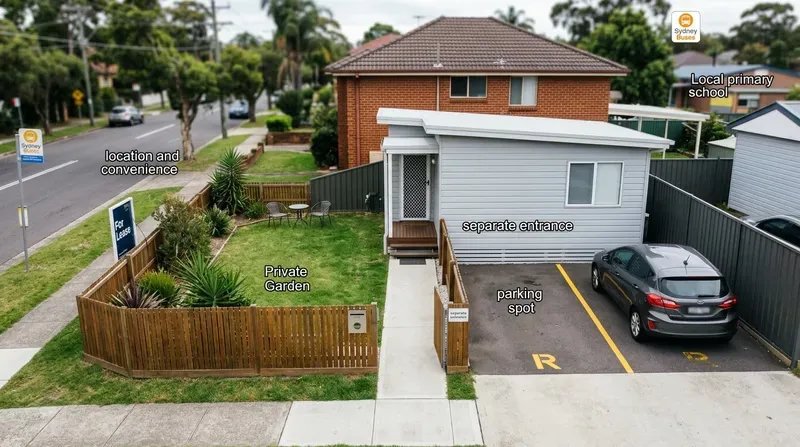
In general, granny flats tend to rent for more when they are:
- Close to train or metro stations, bus routes or major employment centres
- Within easy reach of schools, shopping centres, hospitals and universities
- In quiet, appealing streets rather than on busy main roads
Tenants in 2026 place a high value on walkability and short commute times. When we assess a site, we always look at what a potential tenant’s daily routine would feel like – not just the postcode.
Size, Layout and Configuration
The internal layout and total floor area directly affect both your rent and your target tenant profile.
From our experience:
A well‑designed one‑bedroom flat can suit single professionals, students or downsizers and achieve strong rent in the right suburb
A two‑bedroom flat opens you up to small families, couples, sharers and work‑from‑home tenants, often lifting total rent substantially
Equally important is how the space feels. Open‑plan living, good natural light and minimal wasted hallway space can make a standard 60 m² granny flat feel surprisingly large, which tenants notice immediately at inspections.
Inclusions, Condition and Furnishing
Modern tenants are selective. In a competitive rental market, inclusions can make or break your achieved rent.
Features that often justify higher weekly rents include:
- Split‑system air conditioning and energy‑efficient heating/cooling
- Modern kitchens with quality appliances and durable benchtops
- Well‑finished bathrooms with good ventilation and storage
- Thoughtful lighting and window placement for a bright, comfortable feel
In some specific locations – such as near hospitals or business hubs – fully furnished granny flats can also attract premium rents from corporate tenants or short‑stay renters. This strategy does add complexity, so it is important to understand local rules and risks before committing.
Privacy and Parking
Privacy is one of the biggest concerns for backyard tenants.
In our Sydney projects, flats tend to lease faster and at better rates when they have:
- A separate, clearly defined entrance
- Fencing, landscaping or screens that create a sense of their own space
- Minimal overlooking between windows of the main dwelling and the flat
Parking also matters, especially in denser suburbs. A secure off‑street parking space or carport can make a meaningful difference to rent and tenant demand, particularly in the Inner West and Eastern Suburbs.
Example Rental Income Scenarios
To put the above into context, here are three simplified scenarios based on typical projects we see. These are not promises, but they illustrate how location, cost and rent interact.
Scenario 1 – Western Sydney Two‑Bedroom Flat
- Location: Established suburb in Western Sydney
- Type: Modern two‑bedroom granny flat
- Approximate build cost: around $150,000 (excluding site‑specific extras)
From these assumptions:
- Annual rental income: about $26,000
- Gross yield on build cost: roughly 17%
In practice, we have seen similar projects comfortably cover interest and basic outgoings, while still contributing to the owner’s broader mortgage repayments.
Scenario 2 – Inner West Premium Studio
- Location: High‑demand Inner West suburb
- Type: Compact, high‑quality one‑bedroom studio
- Approximate build cost: around $130,000, reflecting premium finishes and tighter access
- Indicative rent in 2026: around $600 per week
On these numbers:
- Annual rental income: about $31,200
- Gross yield on build cost: approximately 24%
While not every site will achieve this level of rent, we regularly see premium, well‑located flats outperform basic stock in the same suburb – even when they are smaller.
Scenario 3 – Northern Beaches Lifestyle Flat
- Location: Northern Beaches lifestyle suburb
- Type: Two‑bedroom flat with generous deck and upgraded landscaping
- Approximate build cost: around $180,000
- Indicative rent in 2026: around $750 per week
From here:
- Annual rental income: about $39,000
- Gross yield on build cost: roughly 22%
In these lifestyle‑driven markets, tenants are often willing to pay more for outdoor living, privacy and high‑end finishes, which supports both cash flow and long‑term value.
Step‑by‑Step – How to Estimate Rental Income for Your Granny Flat
Step 1 – Check Local Comparables
Start by researching what similar properties in your suburb are renting for right now. Look for:
- Other granny flats or small secondary dwellings nearby
- One‑ or two‑bedroom units with similar size and inclusions
Record a range rather than fixating on a single number. We usually prefer to work with a conservative midpoint when advising clients.
Step 2 – Adjust for Your Design and Inclusions
Compare your planned granny flat to those existing rentals.
Ask yourself:
- Is my flat smaller, similar, or larger than the properties I found?
- Are my inclusions (kitchen, bathroom, finishes) basic, mid‑range or premium?
- Will I be offering parking, outdoor space and a private entrance?
If your design is clearly stronger than the comparables, it may justify aiming towards the upper end of the rent range. If it is simpler, using the mid to lower end is safer.
Step 3 – Run the Gross Yield Calculation
Once you have a realistic weekly rent range, convert it into a gross yield on your estimated build cost.
A simple formula is:
Gross Yield (%) = (Annual Rental Income ÷ Total Build Cost) × 100
For example:
- Estimated rent: $550 per week
- Annual rental income: $550 × 52 = $28,600
- Estimated build cost: $160,000
Gross Yield (%) = ($28,600 / $160,000) x 100 = 17.9%
This figure gives you a quick way to compare different design options or locations.
Step 4 – Consider Ongoing Costs and Buffers
Gross yield does not include all the costs of owning and operating the flat. You will still need to allow for:
- Insurance, council rates and utilities (where applicable)
- Property management fees if you appoint an agent
- Routine maintenance and occasional repairs
- Potential vacancy periods between tenants
Taking a conservative view on rent and building in buffers for costs and vacancies is one of the simplest ways to avoid financial stress later.
“We always encourage clients to run the numbers with slightly lower rent and slightly higher costs than they expect. If the deal still works, they’re usually in a good position.”
JD PRO BUILD – Project Planning Team
Key Risks and Considerations
Vacancies, Market Fluctuations and Maintenance
Even in strong markets, there may be periods where your granny flat is vacant.
Points to keep in mind:
- Allow for some weeks each year without rent when budgeting
- Keep the property well‑maintained – clean, functional homes attract and retain better tenants
- Be prepared for occasional larger expenses such as hot water systems, air‑conditioning units or external painting
A well‑presented and promptly maintained property tends to have fewer and shorter vacancies than one that feels neglected.
Approvals, Tenancy Rules and Compliance
Your granny flat must be properly approved and compliant before you offer it for rent.
This typically involves:
- Securing the right planning approval (CDC or DA) and final occupation certificate
- Complying with relevant building codes and safety standards, including smoke alarms and water efficiency where required
- Understanding your obligations under NSW tenancy laws when entering into a rental agreement
Tax and Financial Implications
Adding a new income stream and structure to your property can have tax consequences. Consider that:
- Rental income will form part of your taxable income
- Renting out part of your property may affect Capital Gains Tax (CGT) when you sell
- Depreciation on the building and fixtures may be claimable over time
Because everyone’s situation is different, we strongly recommend speaking with a qualified accountant or financial adviser before committing to a project or relying on example numbers.
This article is for general information only and does not constitute financial, tax or legal advice. Always seek personalised advice before making investment decisions.
Designing a Granny Flat That Maximises Rental Appeal
The design and specification of your granny flat will heavily influence both your rent and the quality of tenants you attract.
Layouts That Tenants Love
From what we see at inspections, tenants respond best to:
- Open‑plan living areas that feel spacious and flexible
- Good natural light and ventilation in living spaces and bedrooms
- Logical circulation – not long, wasted corridors
We often work with owners to balance practical needs (storage, privacy, noise separation) with a modern, comfortable feel. Even small adjustments to window placement or internal walls can significantly change how the home feels.
Smart Storage and Durable Finishes
In compact homes, storage and durability matter more than ever.
Tenants typically appreciate:
- Built‑in wardrobes in each bedroom
- Sufficient kitchen and laundry cabinetry
- A small external storage option, such as a shed, where site allows
For finishes, we tend to favour materials that are both attractive and hard‑wearing – for example, good quality flooring, robust benchtops and paints that are easy to clean. This helps your flat look fresh for longer between tenants and can reduce long‑term maintenance costs.
Talk to JD PRO BUILD About Your Block’s Rental Potential
Every Sydney backyard is different. The right design and numbers for one site may not work for the next. That is why the most valuable step you can take is to assess your specific block.
Personalised Site Assessment
When we visit a property, we typically:
- Review zoning, approximate lot size and basic access
- Look for visible constraints such as trees, slopes and likely service locations
- Discuss your goals – extra income, long‑term hold, family flexibility or a mix of these
- Provide a realistic build cost range and rental estimate based on similar projects we have completed in your area
Many homeowners tell us that this initial conversation is where their project “clicks” – they can see clearly whether a granny flat makes financial sense for them.
From Feasibility to Finished, Rent‑Ready Home
- Detailed design and inclusions tailored to your site and budget
- The most suitable approval pathway for your property
- Construction right through to final inspections and handover
Our goal is to help you create a granny flat that is compliant, comfortable, and genuinely attractive to tenants, not just a structure on paper.
Conclusion – Is a Granny Flat Worth It for You?
A well‑planned granny flat can be a powerful tool for Sydney homeowners. By understanding realistic rental ranges, the key factors that influence rent, and the true costs of building and holding the asset, you can make a confident, informed decision.
For some blocks, the numbers stack up beautifully – strong rent, manageable costs and a clear path to improved cash flow. For others, constraints such as access, zoning or market conditions may mean a granny flat is not the right move.
If you are ready to explore what is possible on your property, JD PRO BUILD is here to help. Reach out to our team to arrange a no‑obligation site inspection and rental potential assessment for your Sydney backyard. Together, we can determine whether a granny flat is the right step towards your next stage of financial growth.